Exploring Iceland: A 9-Day Adventure
Iceland, the “Land of Fire and Ice,” is a breathtaking mix of volcanic landscapes, majestic waterfalls, and serene glaciers. Embarking on a week-long journey through this Nordic wonderland promises unforgettable experiences at every turn. Here’s a adventure filled 9-day itinerary to help you make the most of your Icelandic journey.
Trip Map
The Journey That Changed My Life
In August of 2021, I spent the most amazing nine days of my life running around the surreal land of fire and ice: Iceland. I spent almost every second in awe, constantly wondering how it was possible that this place was real. Surely I had somehow been transported to another planet, to some fantasy world. I never imagined I could be watching lava sputter into the sky on an active volcano, hike across a glacier to explore its hidden ice caves, feel the mist and hear the roar of enormous waterfalls, and dig my toes into beautiful black sand beaches, all in the same day. Yet there I was.
I know many of you will want to skip the story and jump right to the good stuff, but if this story finds just one other timid traveler and gives them the inspiration to begin their travel journey, my mission here will be successful. So if that sounds like you, please read on!
Iceland was not just a vacation for me; it was the beginning of something much bigger. It was my first international journey, my first solo trip, my travel obsession origin story. I had always known that I wanted to travel, even when I wasn’t sure about anything else in my life. I dreamed about it constantly, but was never brave enough to venture out on my own and was endlessly waiting on others to be able to join me. That hesitation held me back for years until I finally realized that I couldn’t keep waiting—I had to have the courage to go it alone.
Iceland had always been at the very top of my bucket list. Its stunning landscapes, rich history, and adventure-filled opportunities made it the perfect destination. Plus, it’s one of the safest countries in the world and extremely easy to navigate for an English speaker, making it an easy choice for my first solo trip.
Even though I was determined to travel alone, I was still nervous about planning such a big adventure. To ease my worries, I booked my trip through a tour guide company that planned a self-guided itinerary for me. They arranged my accommodations, rental car, and a few excursions I had wanted to do. While this made my trip slightly more expensive, it was a price I was willing to pay for peace of mind. Looking back, I realize that I could have easily planned the entire trip myself. In some ways, booking through the company even caused a few headaches, but at the time it was what I needed to feel confident enough to take the leap into solo travel. Knowing I had a foolproof itinerary and an advisor to reach out to if I needed help was comforting—although, ironically, when I did need them, they were unreachable because I hadn’t realized my “international” phone plan actually only worked for incoming calls… But don’t worry about that, see my Travel Tips page to learn how to make sure you stay connected in new countries.
The tour company put together an itinerary that covered all the incredible destinations I had dreamed of, plus a lot more than I was physically able to fit in everyday (it was 34 dense pages!), so I actually had to cut a lot out. I’ll include those below, but know that you may not have time to do everything. The schedule they gave me could have also been paced better—my first few days were jam-packed, while the latter half of my trip was more relaxed. If you’re planning a similar trip, I’d recommend spacing out your activities more evenly, which I will point out as well.
Even with these small hiccups, my trip was nothing short of spectacular. Iceland exceeded every expectation I had, and even today, it remains the most incredible adventure of my life.
If you’ve been dreaming about traveling but have been hesitant—whether because you don’t have a travel companion or you’re nervous about planning—let this be your sign. Take that first step. Your dream destination is waiting for you.
Read on to find out more about my journey, my itinerary, and the places that made me fall in love with Iceland and travel. I hope it inspires you to take that first or next adventure of your own!
Iceland Travel Guide
Planning a trip can be exciting, but let’s be real—no itinerary is one-size-fits-all. The itinerary that follows is how I traveled the island, but its not perfect. I will share what worked for me, what I would advice against. But keep in mind as you plan for yourself, use this itinerary as a starting point. Adjust it to fit your pace (my pace is often faster than what others would enjoy), and don’t be afraid to stray from the plan if something amazing catches your eye. Whether you prefer a jam-packed adventure or a laid-back exploration, the key is to make this trip work for you. Travel is unpredictable, and the best moments often come from spontaneity. So, take a deep breath, stay flexible, and get ready for an unforgettable journey!
Take what works for you and leave the rest behind.
* A note on food recommendations: I traveled on a budget while in Iceland, and since dining is particularly pricey here, I decided to forgo the foodie desires and make most of my own food. I stopped at local grocery stores to stock up on easy road trip meals and snacks. Many gas stations often had a nice selection of fresh sandwiches that I would pick up as well. Since I did not personally experience any of Iceland’s restaurants, I am not going to provide recommendations here, but finding a nice place to eat is quite easy. Use Google Reviews to help you find something in your price range and quality preferences. If you want to plan your meal stops ahead of time, Wanderlog has a great restaurant recommendation tool.
** A note on road tripping: Make sure to include a budget for gas/fuel in your planning. Plug your destinations into Google Maps or your maps of choice to get an idea of the distance you’ll be travelling. ADD A BUFFER. You never know if you’ll find something unplanned you want to explore. Iceland sells fuel by the liter, make sure to convert the units and the currency when comparing to the price in your country, and keep in mind fuel prices change frequently so your estimate will likely be different than your actual cost.
Accommodations
We obviously all have different preferences when it comes to comfort and accommodations. I suggest you do your own research here to decide where you will be staying, but I will include where I stayed below. If you are traveling on a budget or just enjoy the hostel experience, check out Hostelworld to find the right hostel for you. I recommend using the rating and price filters.
Alternatively, Iceland is very camper friendly. I saw many tent campers and vans/RVs while I explored and often wished I had gone that route. If you are a nature fan and a happy camper like me, look into renting a camping friendly vehicle or being/rent camping gear. Many trailhead parking lots allowed overnight camping, but be sure to do your research ahead of time to make sure you are legally and safely camping in the right spots.
The following accommodations were prebooked for my through the travel agency, so I had little input in where I was staying, however, some of these picks were absolutely amazing and I would stay again. I did travel very quickly, so I stayed at my accommodations just long enough to eat, sleep, and shower. Depending on how you want to travel, you may want nicer accommodations if you will be enjoying them longer.
- Old Charm Apartments: This is a cute little AirBNB in downtown Reykjavík. Its a nice three bedroom full top floor of a house with views of the neighborhood. If you are staying in Reykjavík longer and have a few travel companions with you, this is a really great option. I did have a slight hiccup getting checked in here because the travel agency failed to send me the door code and host’s contact info, so make sure you have this info ahead of time.
- The Garage: This was my absolute favorite stay. Found a little more than halfway between the Golden Circle and Vik, the backdrop to this BNB is absolutely gorgeous with tower green cliffs and cascading waterfalls. The room I stayed in was very nice and had a private exit to a patio overlooking the scenery. They even had enchanting little (stuffed) mice with their very own beds in the corner, a quirky little piece of Icelandic culture.
- Guesthouse Holmur: Tucked back into farmland on the south east side of the island, this BNB includes a few shared guesthouses and apartments with a common room with breakfast in the morning and occasionally live music in the evening. You can see several extents of the nearby glacier field from here.
- Ormurinn Cottages: This beautiful properly sits at the end of a serene lake with a handful of A from cottages overlooking the view. There is also a hostel tucked in the trees, however, the cottages are quite nice if you can fit them into your budget.
- Akureyri Hostel: A simple and clean hostel in the north of Akureyri with a nice garden.
- Geitaskardh: This was a quaint little shared AirBNB in the home of a lovely native couple on their farmland. Unfortunately, I am unable to find any images or additional information on this accommodation online.
- The Freezer Hostel and Culture Center: Another favorite, the Freezer is a hostel in the Snæfellsnes Peninsula with an amazing common area equipped with a bar, stage for live music, local art, and rooms available for events. The owner is very friendly, and you can often find him on stage playing a few tunes.

(image from Google Maps)

(image from Google Maps)

(image from Google Maps)

(image from Google Maps)

(image from Google Maps)

(image from Google Maps)
Day 1: Reykjavík & the Blue Lagoon
If you are able to book a flight into Keflavík early enough, Day 1 can include several spectacular activities to get your trip off to an exciting start.
Make sure you have your phone connection plan set up, whether it be your provider’s international plan, an eSIM, a local SIM that you can pick up in the airport, or what I did which was to rent a hotspot device from the car rental service (I would recommend an eSIM or local SIM). Pick up your rental car and get ready to embark on your great adventure!
I headed straight out to explore from the airport since my first few stops were in the opposite direction as my accommodation in Reykjavík, but depending on your timing, you may want to check in first.
- The Bridge Between Continents: A must pitstop for geology enthusiasts, this is a quick walk from the parking lot to a bridge that literally connects two continents; the North American & Eurasian tectonic plates. The paved trail is lines with adorable painted hearts. Not only can you cross the bridge, but you can venture down into the ravine to touch both sides of the plates which are slowly drifting part a few centimeters each year.
- The Blue Lagoon: This is one of Iceland’s most popular attractions. Boasting 94,000 square feet of milky sapphire waters, this geothermal spa is rich in silica and sulphur minerals that do wonders for the skin. With a basic entry ticket, you get a free face mask of your choice while soaking in the 98-104℉ pools. There is an in-water bar, the Blue Lagoon Cafe, and Lava Restaurant that you can enjoy during your stay as well. Splurge on a nice massage or shopping for skincare made from the hot spring’s mineral in the gift shop.
- BOOK THIS IN ADVANCE – The Blue Lagoon is a very popular destination and can get booked up fast. Make sure you get your slot by booking in advance. Just make sure you have enough buffer time in your travel to arrive during your allotted time slot. (Think about flight delays, waiting time for picking up rental cars, time for yourself to get settled and navigate)
- Reykjavík: Explore Iceland’s vibrant capital. Wander the bustling streets filled with cafes, boutiques, and art galleries. For dinner, indulge in Icelandic cuisine at one of the local restaurants, perhaps sampling dishes like lamb or fresh seafood. Be sure to check out these iconic sights along the way:
- Laugavegur: The heart of Reykjavík’s shopping and cultural scene, buzzing with energy, art, and a diverse array of shops, restaurants, bars, and cafés. As one of the city’s oldest streets, it remains a lively hub of activity.
- Hallgrímskirkja Church: A Lutheran parish church which stands at 74.5 meters, making it the largest church in the country and one of its tallest structures. Its architecture is reminiscent of the natural basalt columns that you’ll find around the island.
- Sun Voyager: A sculpture by Jón Gunnar Árnason, stands beside the Sæbraut road in Reykjavík. Often described as a dreamboat or a tribute to the Sun, it symbolizes the promise of uncharted horizons—a vision of hope, progress, and freedom as imagined by the artist.
- The Icelandic Phallological Museum: This stop may not be for everyone, but its unique experience is one for the books. This museum houses a collection of over 200 penile specimens from nearly every land and marine mammal found in Iceland, ranging from tiny rodents to massive whales.
More to Explore:
- Keflavík: Explore the town that you fly into. Notable museums include Viking World, the Icelandic Museum of Rock and Roll, and the Keflavík Maritime Center. Explore the bustling harbor and dine on fresh seafood.
- Venture to an active volcano: This option is also included in the last day. The Reykjanes Peninsula is often erupting (literally) in volcanic activity. Check for recent activity and when/where to safely view mother nature at work.
- See Day 9 for other alternative activities in the Snæfellsnes Peninsula that could be swapped out for this day.
Day 2: The Golden Circle and South Coast Wonders
This day was one of my favorites of the trip. Today you will get to explore some of Iceland’s most breathtaking landscapes, packed with unforgettable sights from thundering waterfalls to steaming geysers and striking volcanic formations, and of course, the famous black sand beaches.
The Golden Circle is one of the most traveled scenic routes in Iceland, and there is so much to see here. I’ve included a lot in this section. If you are an early riser and like to go-go-go, this can be a great day full of action. However, if you like to slow things down or explore in ore depth, I recommend removing a few of these options from your itinerary so you can go at a more leisurely pace. Alternatively, you could also split these activities into two days; one day for the Golden Circle, one day for the South Coast, especially if you have any interest in visiting the additional villages I have list under More to Explore.
- Þingvellir National Park: A UNESCO World Heritage site, Þingvellir is a scenic region where you can find numerous hiking trails covered in green moss and leading to waterfalls, rivers, and more. As another area where the North American and Eurasian tectonic plates meet, you can witness geology in action here. Are you scuba certified? Here you can find a very unique experience of scuba diving right into the tectonic rift. If you’re brave enough to venture into the cold water, you can see forever in the crystal clear water even with just a snorkel mask. Not only is this site geologically significant, but also historically important as the location of Iceland’s first parliament. And for fans of Game of Thrones, this is also a well known filming location.
- Gullfoss Waterfall: Its no secret that Iceland is absolutely covered in waterfalls, but there are a handful that are just on a whole other level than the others. Gullfoss is a mighty and powerful waterfall, possibly Iceland’s most famous. After just a short walk, you can marvel at its beauty and witness its roar as it cascades into a rugged canyon.
- Geysir Geothermal Area: Just a short drive from Gullfoss lies the Geysir Geothermal Area, home to bubbling hot springs, mud pots, and the famous Strokkur geyser. Strokkur erupts every few minutes, shooting boiling water up to 30 meters into the sky, so be sure to have your camera ready!
- Kerid Crater: Before heading further south, make a quick stop at Kerid, a striking volcanic crater with a deep blue lake at its center. The contrast between the vivid red rock and the water’s brilliant hue makes for a stunning sight. You can walk around the rim or descend to the water’s edge for a closer look.
- Seljalandsfoss: Surrounded by green hills, Seljalandsfoss (did you know foss means waterfall in Icelandic?) drops its cascading waters into a gorgeous pool. You can walk behind the misty falls for a truly immersive experience (just be prepared to get a little wet!). Keep walking down the short trail to find my favorite hidden gem: Gljufrabui. This is another incredible waterfall that is completely enclosed in a little cave-like canyon. Be prepared to get even more yet here, but it is a must see and truly worth it.
- Skógafoss: Not far from Seljalandsfoss, Skógafoss impresses with its sheer power and 60-meter drop visible from the highway. When the sun is out, you can find incredible rainbows here. If you’re up for a challenge, climb the stairs to the top for a panoramic view of the surrounding landscape.
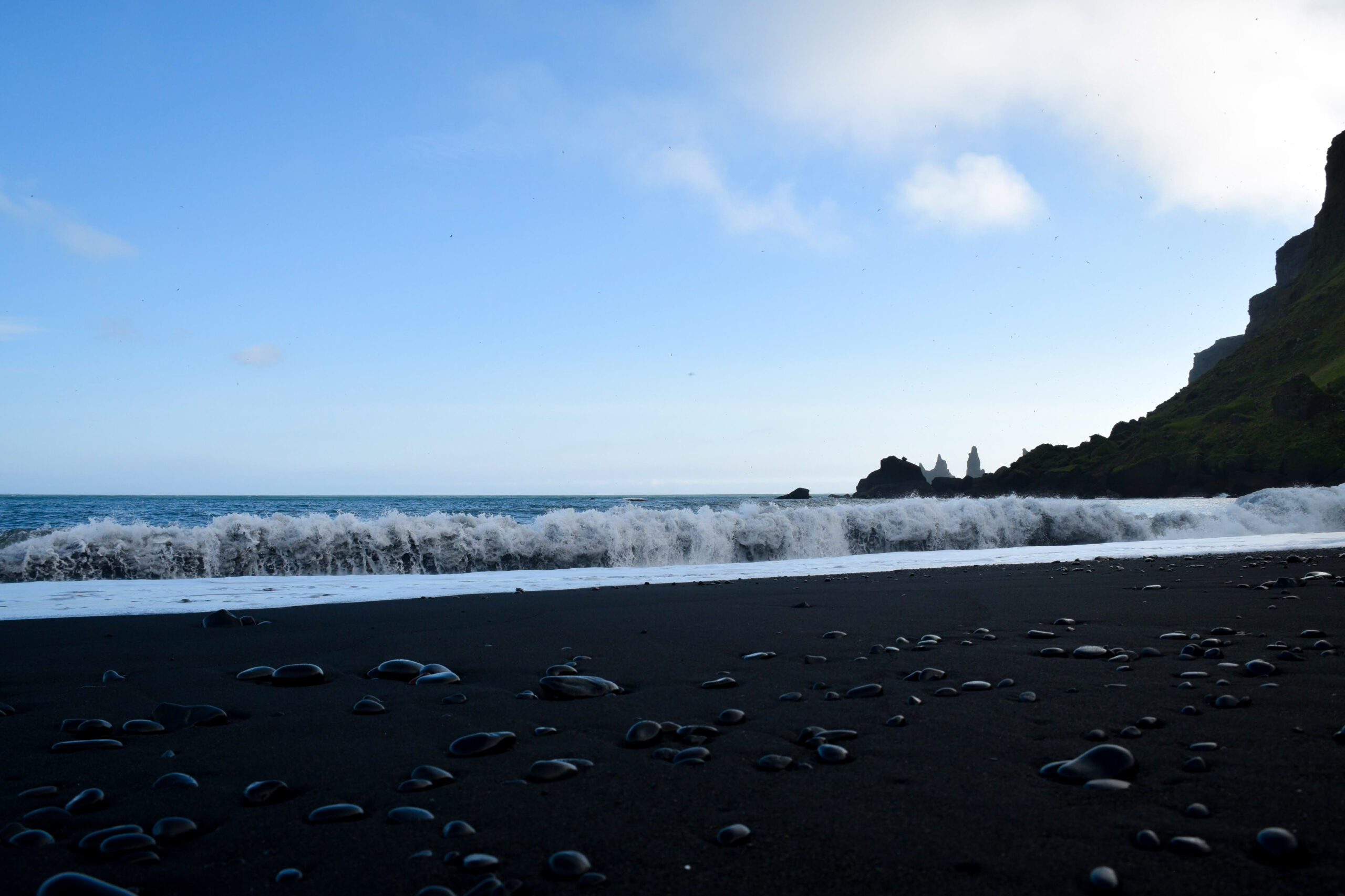
- Reynisfjara Beach: As the day winds down, make your way towards Vik, where you’ll find the famous jet-black volcanic sand beaches with towering basalt columns, and dramatic sea stacks known as Reynisdrangar. This beach can get quite windy and the waves here are powerful, so be cautious, but the eerie beauty of the landscape is absolutely mesmerizing.
- Vík: Nestled at the foot of a glacier-covered volcano, you’ll find the charming coastal village of Vík. Warm up with a hot drink at a local café or explore the town’s picturesque surroundings before heading to your accommodations for the night.
- Shh… I’m sharing a secret here… Everyone is going to be heading to Reynisfjara to experience the black sand beach, so it gets very PACKED. And did I mention windy too? If crowds and wind aren’t your thing, there is an equally amazing black sand beach right on the other side of the cliff, in Vík. When I got here, there was only one other person on the beach (a very friendly local) and no wind. Even though these two beaches are literally right next to each other and equally stunning, they couldn’t have felt further apart. I highly recommend spending your time here instead.
More to Explore:
- Laugarvatn: Make a pitstop between Þingvellir and Geyser in this small village. Fontana Spa features several warm pools, saunas, and steam rooms. Wade or swim in the naturally heated lake. Find a spot to sit down for food or take a stroll on one of the hiking trails.
- Flúðir: Another village great for a pit stop. Find the Secret Lagoon with the oldest swimming pool in Iceland or climb the mountain here for incredible views of the surroundings and the mountain top lake.
Day 3: Glaciers & Iceburg Lagoons
This day if full of otherworldly icy wonders. Black and white landscapes, towering basalt waterfalls, and frozen excursions will bring you to another side of Iceland’s beauty.
Each of the locations listed below can be explored without a guide, however, if that is what you choose to do, be sure you are well experienced in the activities you chose, and have the appropriate gear. I recommend booking guided tours to get the most of these destinations.
- Katla Ice Cave – Just outside of Vík is Kalta, one of Iceland’s most explosive volcanoes. Kick off your day with an adventure deep into the heart of Katla Ice Cave, a mesmerizing natural wonder beneath Mýrdalsjökull glacier. This ice cave, formed by the ever-changing forces of ice and volcanic activity, glows with striking shades of blue and black, creating an almost surreal experience. A guided tour will take you through the cave’s tunnels, where you’ll witness layers of ancient ice and volcanic ash, a testament to Iceland’s dynamic landscape. Even the surrounding landscape is stunning, seemingly void of color, the glacier is purely black and white which makes for a very unique visual experience. Be sure to bundle up—it’s cold inside, but the beauty is worth every shiver!
- Please, please, please listen to your guide when they tell you not to venture off from the group. I made the arrogant mistake of wandering around on my own while waiting my turn to go into the cave. While exploring, I took one step into what seemed to be the same solid ground as everything else, but turned out to be a crevasse filled with freezing water and volcanic sediment. It was virtually impossible to distinguish and when I fell in, I went hip deep and never felt solid ground underneath. I was lucky enough to have enough footing on solid ground to pull myself out, but it could very well have been a deadly experience… The guides know where the safe path is, so stick with them and you will be just fine!
- Be sure to book your tour in advance.
- Svartifoss (Skaftafell National Park) – After the thrill of the ice cave, head toward Skaftafell National Park to visit Svartifoss, one of Iceland’s most unique waterfalls. What sets this cascade apart is its dramatic backdrop—towering hexagonal basalt columns that resemble a giant pipe organ. A short but rewarding hike through the park leads you to this striking waterfall, where the contrast of dark rock against the rushing white water makes for a picture-perfect moment. The waterfall is also surround by lush green forest, a major contrast to the glacial landscapes you can from and will continue on to.
- Jökulsárlón Glacier Lagoon: Continuing east, you’ll arrive at one of Iceland’s most famous natural wonders: Jökulsárlón Glacier Lagoon. Here, massive icebergs break off from the Breiðamerkurjökull glacier and drift gracefully across the lagoon before making their way out to sea. Take an amphibian boat tour to glide among these towering ice sculptures and learn about the science of icebergs, or simply admire the serene beauty from the shore. The lagoon’s ever-changing ice formations create a stunning spectacle that feels almost otherworldly, each piece of floating ice like a work of art. And don’t miss the playful seals and they swim around the lagoon!
- Be sure to book a boat in advance.
- Diamond Beach: Just across from the glacier lagoon, witness ice chunks scattered across the black sand, glistening like diamonds under the sun. These shimmering ice formations, scattered across the dark sand, sparkle like diamonds in the sunlight, creating a breathtaking contrast. Stroll along the shoreline, marvel at the glacial fragments, and soak in the raw beauty of Iceland’s south coast as the day comes to an end.
More to Explore:
- Kirkjubæjarklaustur: This small village in southern Iceland is known for its rich history, connections to Irish monks, and a Benedictine convent that influenced local folklore. Surrounded by unique natural features like the basalt pavement Kirkjugólf and the waterfall Systrafoss, it serves as a convenient stop between Vík and Höfn.
- Höfn: This fishing town in southeast Iceland is known for its scenic harbor, seafood restaurants, and annual Humarhátíð (lobster festival) in July. With abundant birdlife, including migratory species from Scotland, it also serves as a great base for exploring nearby attractions like Vestrahorn mountains.
Day 4: East Fjords & Hidden Gems
While much of Iceland’s spotlight falls on the south coast or the Golden Circle, East Iceland offers a quieter, equally mesmerizing escape. With dramatic mountains, hidden waterfalls, and even a forest (yes, a real one!), this region is perfect if you’re looking to get off the beaten path.
- Vestrahorn – Start your day early at a jagged mountain range rising from the black sands of the Stokksnes Peninsula. Known for its photogenic reflections in the shallow tidal flats, this spot feels almost cinematic. Whether you catch it at sunrise, under moody clouds, or with clear skies, Vestrahorn offers one of Iceland’s most striking views. The nearby Viking village film set is a fun bonus to explore if you’re into quirky detours.
- Folaldafoss – Head inland for a new type of scenery. The drive itself is part of the magic—winding through dramatic mountain passes and open landscapes. You’ll begin traveling up a well maintained gravel road. Don’t worry, even in a small rental sedan, this road is easy to navigate. At the start of the climb, you’ll find Folaldafoss, a lesser-known but incredibly scenic waterfall nestled in a peaceful valley. Unlike some of the bigger waterfalls that attract crowds, Folaldafoss felt like a personal discovery. It wasn’t on my initial itinerary, but when I found it, it instantly became one of my favorite spots. The short walk to the base gives you a close-up view of the water tumbling over the cliffs into a serene blue pool below. Bring a snack and take a moment to just soak it all in.
- Hengifoss – Continue up the gravel pass. I highly recommend taking your time up here, there are beautiful fields of fluffy white cotton grass and cascading waterfalls around many corners. As I traveled here, the fog came and went, hiding then exposing incredible little secrets. Your next stop is Hengifoss, one of Iceland’s tallest waterfalls at 128 meters. What makes it truly special, though, is the dramatic red strata that streak the surrounding cliffs—a geological masterpiece that reveals layers of volcanic history. The hike to the falls is short and includes a view of another beautiful cascade, Litlanesfoss, known for its columnar basalt formations. The views here gave me feelings of being in another world, somewhere full of fantasy.
- Hallormsstadhaskogur – Round off your day with a peaceful walk in Iceland’s largest forest, located along the shores of Lake Lagarfljót. This area is a rarity in a country known more for lava fields than leafy canopies. There are several marked trails, from easy lakefront strolls to more challenging forest hikes. Depending on the season, you might even find blueberries, mushrooms, or wildflowers dotting the landscape.
More to Explore:
- Djúpivogur: This tranquil village in the East Fjords offers access to activities like birdwatching at Búlandsnes, boat tours to Papey Island, and hiking up Búlandstindur. Rich in history and culture, it features a heritage museum, unique sculptures, the Æðarstein lighthouse, and was once a key Danish trading post in the early 19th century.
- Eskifjörður: This is a picturesque town in the East Fjords with a rich history as one of Iceland’s earliest trading posts and a population of just over 1,000. Surrounded by natural beauty, it offers museums, hiking trails along the Hólmanes peninsula, and attractions like Randulff’s Sea House and the Bleiksá waterfall, with the more adventurous able to climb Hólmatindur for stunning views.
- Egilsstaðir: The largest town in East Iceland, it serves as a regional hub for services and transportation while maintaining a peaceful atmosphere along the banks of the Lagarfljót River. Visitors benefit from its convenient location near natural attractions like Hallormsstaðaskógur forest, Hengifoss waterfall, and the Kárahnjúkar Hydropower Plant, as well as its annual jazz festival in November.
- Seydisfjordur: This small village in East Iceland offers stunning fjord scenery alongside outdoor activities like paragliding, scuba diving, and puffin-watching. Despite its size, it thrives as a cultural hub with art centers, museums, the Tvísöngur Sound Sculpture, and vibrant festivals such as the Art in the Light Festival and Autumn Feast.
- Vopnafjörður: This historic village in Northeast Iceland is known for its fishing, agriculture, and tourism, as well as its connection to Halldór Laxness’ Nobel Prize-winning novel Independent People. Visitors come to explore their Icelandic heritage, enjoy salmon fishing in the renowned Hofsá and Selá rivers, go whale-watching in the bay, and experience local culture at museums like Bustarfell and Múlastofa.
Day 5: Mývatn & Akureyri
North Iceland is full of wonders—dramatic landscapes, geothermal treasures, and tucked-away gems that many travelers miss. This day trip takes you through some of the region’s most unforgettable stops, from the raw power of enormous waterfalls, to the relaxing hot spring waters, and even a quirky café with a view of actual cows.
- Stuðlagil Canyon – I was truly astounded when I realized that my itinerary didn’t originally include this stop. It was one of those images that I had stumbled across online many times, possibly being one of the main drivers for getting me to Iceland. I think it is actually one of Iceland’s best-kept secrets. I arrived around 8am and was stunned by the fact that such an incredible natural treasure didn’t have a single other visitor. I had this all to myself. Hidden away in East Iceland’s Jökuldalur valley, this canyon is lined with towering basalt columns and split by a stunning, serene, turquoise river. Get here early to have the same experience of a lifetime.
- Dettifoss – Next, head toward Dettifoss in Jökulsárgljúfur canyon, part of Vatnajökull National Park. This beast of a waterfall is often called Europe’s most powerful, and you’ll understand why the moment you hear its thunderous roar. It’s a raw, almost primal experience. Movie fans might recognize it from the opening scene of Prometheus—a fitting backdrop for something that feels so otherworldly. There are two sides to view the falls: the east side offers a closer, more dramatic angle, while the west side has easier access and more established paths. Either way, it’s guaranteed to impress.
- Mývatn Nature Baths – After all that canyon-hopping and waterfall-chasing, it’s time to relax. Mývatn Nature Baths are a blissful geothermal escape, with milky-blue water, natural minerals, and far fewer tourists than the more famous Blue Lagoon. Soak in the warmth while looking out over lava fields and the Mývatn region’s unique volcanic landscape. The peaceful vibe here is unmatched—bring a towel, and maybe don’t plan to rush this part. But be warned: the sulfur from the hot springs creates quite a pungent odor and attracts an insane amount of flies, BUT, this is only a nuisance when you’re in the parking lot. Get inside quick and it gets a lot better.
- It might be a good idea to book a spot in advance.
- Goðafoss Waterfall – Back on the road, make your way to one of Iceland’s most iconic and historically rich waterfalls. Legend has it that when Iceland converted to Christianity around the year 1000, pagan idols were thrown into the falls—earning it the name “Waterfall of the Gods.” Even without the backstory, the curved, horseshoe-shaped falls are simply gorgeous. You can view the falls from both sides of the river, and both offer great photo ops and a peaceful place to pause.
- Kaffi Kú – AAs the day winds down, treat yourself to a quirky and cozy stop at Kaffi Kú, a café located on a working dairy farm near Akureyri. Grab one of their legendary dessert waffles or an indulgent milkshake, then head upstairs where you can watch the cows through giant windows while you eat. It’s a wholesome, uniquely Icelandic experience that makes you smile and slow down for a bit.
- At the time of writing this blog, I wasn’t able to find this cafe on Google anymore, it may unfortunately now be closed.
- Akureyri – End your day in Iceland’s second-largest city—but don’t let the “city” label fool you. It’s charming, walkable, and full of character. Stroll through the downtown area and grab dinner at one of the local restaurants. I fell absolutely in love with Akureyri, I even considered moving here for a while…
More to Explore:
- Mývatn and Mývatn Lake: Mývatn technically refers to the stunning lake in North Iceland, but locals often use the name for the surrounding area, which is rich in natural wonders, from bird-filled islands and dramatic lava pillars to the rare ‘Moss balls’ found only here and in Japan’s Lake Akan. Visitors can explore unique sites like the bubbling mud pools of Mt. Námafjall, the Skútustaðir pseudo craters, and the eerie Dimmuborgir lava formations before unwinding in the region’s geothermal Blue Lagoon of the North.
- Kjarnaskógur: Once a barren landscape, this area has transformed into Iceland’s most visited forest, spanning 600 hectares due to successful reforestation efforts. With extensive hiking and biking trails, birdwatching sites, winter skiing routes, and family-friendly amenities, it continues to grow and flourish as a natural retreat near Akureyri.
Day 6: The Serene North
As I mentioned from the day before, I had fallen in love with Akureyri. So much so, that I decided to forgo my itinerary for the day, wander through the Botanic Gardens, and continue exploring the town with some leisure time. But don’t worry, I will still include what I was supposed to do this day, I just won’t have any personal experience tips to provide here.
- Akureyri Botanical Garden – I am an absolute sucker for a good botanical garden, and this one did not disappoint. It is actually the northernmost botanic garden in the world! It full of wild looking flowers and plants from all over the world. I highly recommend checking it out before leaving town to explore the rest of the north.
- Siglufjörður: This picturesque fjord surrounded by towering mountains is home to a charming town with a rich maritime history, best explored at the renowned Herring Museum and cultural centers dedicated to folk music and poetry.
- Hofsós: One of northern Iceland’s oldest trading ports, this village has long relied on fishing and farming but has recently grown as a historical tourism destination. Visitors can explore the Icelandic Emigration Center, the Drangey Exhibition, and Massacre Hill, while also enjoying scenic walks along basalt-lined shores, birdwatching at Lake Höfðavatn, and trout fishing near Thorðarhöfði headland.
- Hólar í Hjaltadal: This small village with a rich history was once the diocese of North Iceland and played a key role in the country’s conversion to Christianity. Visitors can explore archaeological finds in the old schoolhouse, climb the 18th-century Hólakirkja Cathedral tower, visit the traditional turf house Nýibær, and hike to Gvendarskál on Mt. Hólabyrða, where breathtaking views once inspired a 12th-century bishop’s prayers.
- Blönduós: This scenic village of 850 people in Northern Iceland sits along the Blanda River, one of the country’s longest, making it a prime spot for trout and salmon fishing. Visitors can explore Hrútey Island for birdwatching, admire the church’s crater-like architecture, and visit unique attractions like the Sea Ice Exhibition Centre and Iceland’s only Textile Museum.
Day 7: Snæfellsnes Peninsula
Often referred to as “Iceland in Miniature,” the Snæfellsnes Peninsula boasts a diverse array of natural attractions that feel like stepping into a fantasy novel—complete with glacier-capped volcanoes, lava caves, dramatic coastlines, and storybook fishing towns—then West Iceland is calling your name.
- Hvítserkur – Start your day with a sense of myth and mystery at a striking basalt sea stack that rises from the ocean along the Vatnsnes Peninsula. Its unique shape has earned it nicknames like “the dragon drinking from the sea” or “the troll turned to stone.” Visit during low tide for the best view—and the chance to walk right up to it on the black sand beach. The area is peaceful and often uncrowded, with seabirds flying above and seals frequently lounging nearby on the shoreline.
- The Cave Vidgelmir – Next, go from sea to earth—literally—with a visit to Iceland’s largest lava tube. Formed over 1,000 years ago by flowing lava, this massive cave system is like stepping into another world. A guided tour leads you through vast chambers with multi-colored lava walls, intricate rock formations, and fascinating textures that tell the story of Iceland’s fiery past. It’s an immersive, underground experience that showcases the raw, volcanic power that shaped this island.
- Be sure to book your tour in advance.
- Helgafell – Next, head to a small but spiritually significant mountain on the Snæfellsnes Peninsula. According to local legend, if you climb Helgafell in complete silence, without looking back, and make three wishes at the summit, they will come true. The hike is short and easy, offering stunning views over the surrounding countryside and Breiðafjörður Bay.
- Selvallafoss – On your way to the next big mountain, take a short pitstop at a serene and lesser-known waterfall tucked away in a quiet valley. Unlike many other waterfalls in Iceland, you can actually walk behind falls (without a crowd), offering a unique perspective of the cascading water and surrounding landscape. The short walk to the waterfall is relatively easy and incredibly picturesque, with moss-covered rocks and a tranquil atmosphere.
- Kirkjufell Mountain: Your next stop is a unmistakable mountain, a perfectly sculpted hill that looks like it was plucked from a fantasy world (or, if you’re a Game of Thrones fan, the “Arrowhead Mountain”). The nearby Kirkjufellsfoss waterfall provides the perfect foreground for photos, especially in the soft morning light. It’s no surprise this duo is one of the most captured scenes in Iceland.
- Snæfellsjökull Glacier: If time allows, end your day with a visit to a glacier-capped volcano that inspired Jules Verne’s Journey to the Center of the Earth. This imposing peak looms large over the peninsula, its snow-covered summit creating a dramatic silhouette against the sky. While the glacier itself is often inaccessible without a guide, there are plenty of viewpoints around the base where you can marvel at its grandeur.
More to Explore:
- Borgarvirki: This natural basalt fortress on the Vatnsnes Peninsula stands 177 meters above sea level, with stairs leading to breathtaking panoramic views. Thought to have been used for defense in the 13th century, its origins remain uncertain, but visitors can explore its ancient ruins, freshwater well, and rugged terrain, which was partially restored in the mid-20th century.
- Hvammstangi: This charming village of 580 people in Northwest Iceland, has a growing tourism industry alongside its thriving fishing trade, known especially for its fresh shrimp. Located on the Vatnsnes Peninsula, it is a prime spot for seal watching, with large colonies nearby, and visitors can learn more about these animals at the Icelandic Seal Centre.
- Lóndrangar: The Lóndrangar basalt cliffs on the Snæfellsnes Peninsula are the remnants of an ancient volcanic crater, now standing as two towering rock pillars, earning them the nickname “the rocky castle.” Easily accessible from the Visitor’s Centre or viewed from the sea, these dramatic formations are surrounded by folklore, with tales of elves inhabiting the nearby fields and legends of a poet striking a deal with the devil at Þúfubjarg cliff.
- Arnarstapi: This scenic village on the southern Snæfellsnes Peninsula is known for its charming historic houses and striking coastal landscapes. The area features unique geological formations like the stone arch Gatklettur and the rifts Hundagjá, Miðgjá, and Músagjá, while also offering excellent hiking trails through the Hellnahraun lava field and opportunities to observe nesting Arctic terns.
- Búðir: Nestled near the renowned Snæfellsjökull glacier, Búðir is a remote yet stunning hamlet with a rich history dating back to Iceland’s first settlers. Once a fishing hub, it is now a romantic getaway known for its historic church, the acclaimed Hotel Búðir restaurant, and scenic hiking trails that lead to golden beaches, rugged inlets, and the dramatic Búðahraun lava field.
Day 8: West Iceland
On your last full day in Iceland, explore the west region steeped in history, natural beauty, and quiet charm. Explore ancient cultural sites, marvel at unique waterfalls, and enjoy the relaxed pace of small-town life. The first two stops this day are actually headed back towards the Cave Vidgelmir from the day before. Depending on which stops you chose to hit, they locations could be swapped around to cut out some back and forth driving time.
- Reykholt – Begin your day in one of Iceland’s most historically significant villages. Once home to the great medieval writer and chieftain Snorri Sturluson, Reykholt played a central role in the Icelandic Sagas and early Norse literature. Nearby, explore the remains of Snorri’s hot spring pool and the quaint church grounds. The village is peaceful, surrounded by greenery, with an air of quiet reverence that transports you back in time.
- Barnafoss/Hraunfossar – A short drive from Reykholt brings you to two of West Iceland’s most unique waterfalls: Barnafoss and Hraunfossar. Though right next to each other, these falls couldn’t be more different in character. Hraunfossar (Lava Falls) is a series of gentle, icy streams that emerge straight from the lava field, trickling through moss-covered rocks into the Hvítá River. In contrast, Barnafoss (Children’s Falls) is a much more turbulent and dramatic cascade, steeped in folklore and tragedy—named after a story of two children who drowned crossing a natural stone bridge that once spanned the falls.
- Borgarnes – Wrap up your day in this coastal town, a charming and relaxed community with sweeping views of the bay and surrounding mountains. Take a walk along the waterfront, explore local shops, or grab dinner at one of the cozy cafés or restaurants—many with views of the sea. Once you’ve taken in all you can, head back to Reykjavík for a final night before going home.
Day 9: Final Moments
This day is going to depend on the timing on your flight home. If you’ve got the time, you can head out to explore more of the peninsula, and with less time, explore Reykjavík for more hidden gems. I got adventurous and decided to get a traditional Icelandic hand-poked tattoo before heading to my flight!
Options to explore with more time:
- Fagradalsfjall Volcano – If active, this is an incredible place to witness Iceland’s volcanic power. I chose to head out for this volcano in the extremely early morning to try and get a glimpse of the eruptions in the dark, but a day trip could be equally rewarding. There were several ways to hike to viewpoints, I chose to hike the ridge for a top down view. I won’t lie, it was a bit of a miserable hike as the fog had set in quite thick and the weather was windy, but I still enjoyed the very Icelandic experience. Check the weather before you head out to decide if it’s something you’re up for.
- Blue Lagoon: If you didn’t visit the Blue Lagoon on your first day, be sure to squeeze it in before you go (or if you already visited and want to do so again!). Relax in the rejuvenating hot springs after all your exploring before saying goodbye to the island.
More to Explore:
- Kleifarvatn: The largest lake on the Reykjanes Peninsula, it spans 4.7 km in length and 97 meters in depth, though it shrank by 20% after a 2000 earthquake opened a ravine beneath it. Surrounded by dramatic volcanoes, the lake is known for its eerie beauty, geothermal activity in the south, a thriving char population, and folklore about a monstrous wyrm lurking beneath its waters.
- Krýsuvík: This stunning geothermal area on the south side of the Reykjanes Peninsula features steaming vents, bubbling hot springs, and vibrant hills colored by natural minerals, with a boardwalk guiding visitors safely through the site. Nearby attractions include the striking crater lakes Grænavatn, Gestsstaðavatn, and Augun, as well as the bird-filled Krýsuvíkurberg Cliffs, the ruins of Selatangar, and the unique lava basin of Brimketill—though visitors should stay on designated paths due to the area’s geothermal hazards.
- Gunnuhver: This vibrant geothermal area on the southwest Reykjanes Peninsula features Iceland’s largest mud pool, where acidic water reacts with lava rock to create bubbling clay, producing dense steam that resembles a power plant from afar. Steeped in folklore, it is said to be haunted by the ghost of Guðrún Önundardóttir (Gunna), who was tricked into a steam vent by a sorcerer, and while those with second sight may still glimpse her in the mist, all visitors can explore the surrounding Reykjanes Geopark with its craters, lava fields, bird cliffs, and the Bridge Between the Continents.
Additional Tips: make sure to link to tips/resources
Be sure to check out all my budget and safety tips here. You can even download a printable pre travel checklist. Also check out all of my recommended gear here to make your travels go more smoothly.
- Northern Lights: From September to April, keep an eye on the aurora forecast and venture out on clear nights to witness the mesmerizing Northern Lights.
- Sunlight: Iceland is located very far north. This gives it a unique relationship with the sun. In the summer the days get extremely long and in the winter, extremely short. Be sure to check the sunset and sunrise times for your dates before planning your trip.
- Accommodation: Book accommodations in advance, especially during peak tourist seasons, to ensure availability.
- Transportation: Renting a car offers flexibility, but ensure it’s equipped for Iceland’s variable weather conditions, and if you plan on venturing into the highlands, be sure you’re renting an appropriate vehicle.
- Safety: Always check weather and road conditions before setting out each day. Although Iceland is a small island, the weather can vary dramatically.
- Local Cuisine: Don’t miss out on traditional Icelandic dishes, and consider visiting Reykjavík’s vibrant food markets for a taste of local flavors. However, dining out can be quite expensive in Iceland, so be sure to monitor your budget.
- Respect Nature: Iceland’s landscapes are fragile. Always stay on marked paths and follow local guidelines to preserve the environment for future generations. Admire wildlife from a distance, and practice Leave No Trace.
Embarking on this 9-day journey will immerse you in Iceland’s diverse landscapes and cultural treasures, leaving you with memories to cherish for a lifetime. Whether you follow my guide entirely or visit just one of these places, I would love to hear all about it! Know of some additional places that people should know about? Leave me a comment and tell us all about it! Thank you for reading, see you next time! Bon Voyage!
Fix wander log, pictures, descriptions, skip days